


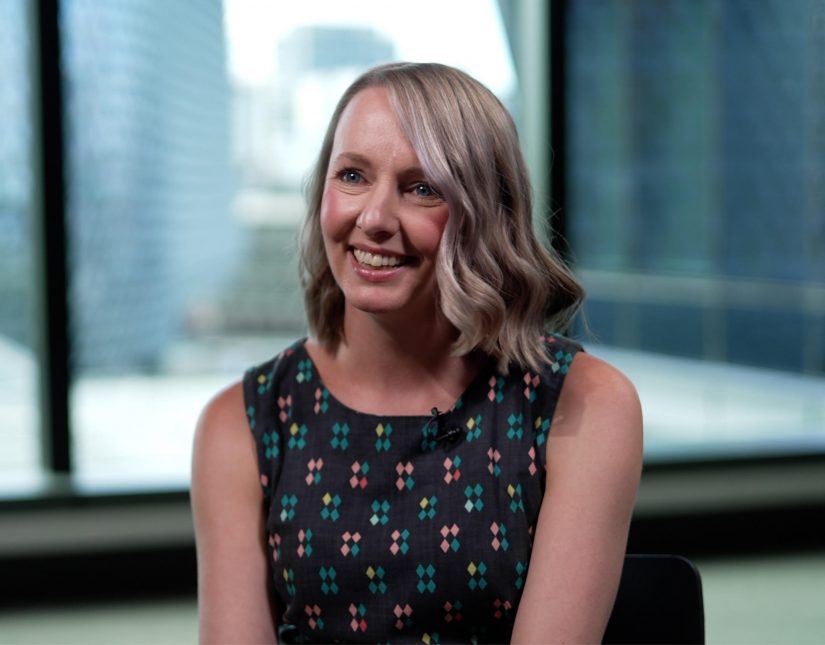
The Royal Adelaide Hospital Intensive Care Unit (ICU) provides advanced and highly specialised care to the state’s most critically ill patients.
As critical care medicine advances, the ability of patients to survive ICU rises.
Following discharge, many ICU patients experience cognitive, functional, and psychological issues because of their illness and life-saving medical care.
Termed Post Intensive Care Syndrome (PICS), these symptoms can contribute to the patient’s delayed return to work, loss of independence, and increased rehospitalisation rates.
Australian data shows that six months after ICU discharge, 75 per cent of patients report ongoing disability, 60 per cent have not returned to work, and by 12 months, 50 per cent still experience PICS symptoms.
“Our multidisciplinary team of clinician researchers is researching ways to improve outcomes for patients who experience the long-term effects of their ICU stay,” said Associate Professor Lee-anne Chapple, Clinical Dietitian and Researcher, Royal Adelaide Hospital
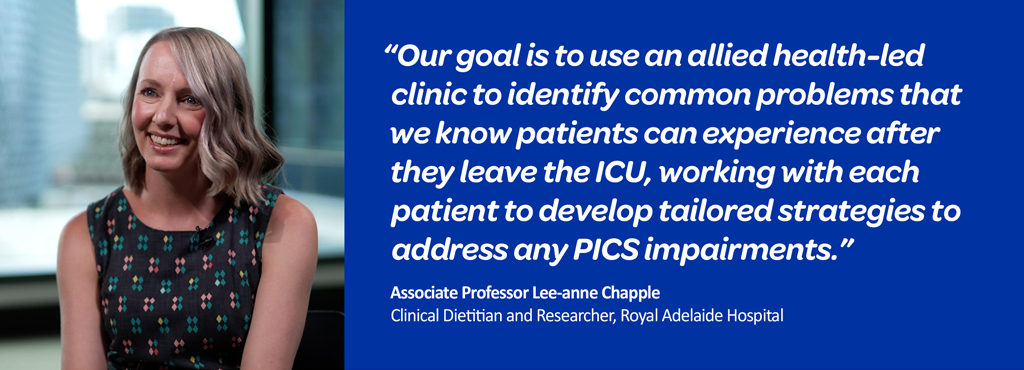
As part of the research, Royal Adelaide Hospital ICU patients will receive dietetic, physiotherapy or psychology support, with telehealth consultations available to ensure access to regional and rural patients.
Click here to support the ongoing research into improving outcomes for critically ill patients
“Putting in place an intervention for these ICU survivors has been something our clinicians have wanted to explore. We expect to see improved outcomes for patients, and if proven through our research, we aim to implement a post-ICU clinic as part of routine care, improving the ongoing health for many South Australians,” said Associate Professor Chapple.
The Royal Adelaide Hospital has 4000 patients admitted every year. If 75 per cent of those experience ongoing disability, then that’s a considerable proportion of the South Australian community that’s affected.
These sorts of interventions can be expensive and require strong evidence of their benefit before implementation, so without financial support from donors, our ability to generate this evidence to improve the patient’s recovery wouldn’t be possible.
Your support will allow the team to solve this problem.
Thank you your generosity will change lives.